
English| EUR
Suggested for you
More currencies
Choose a language
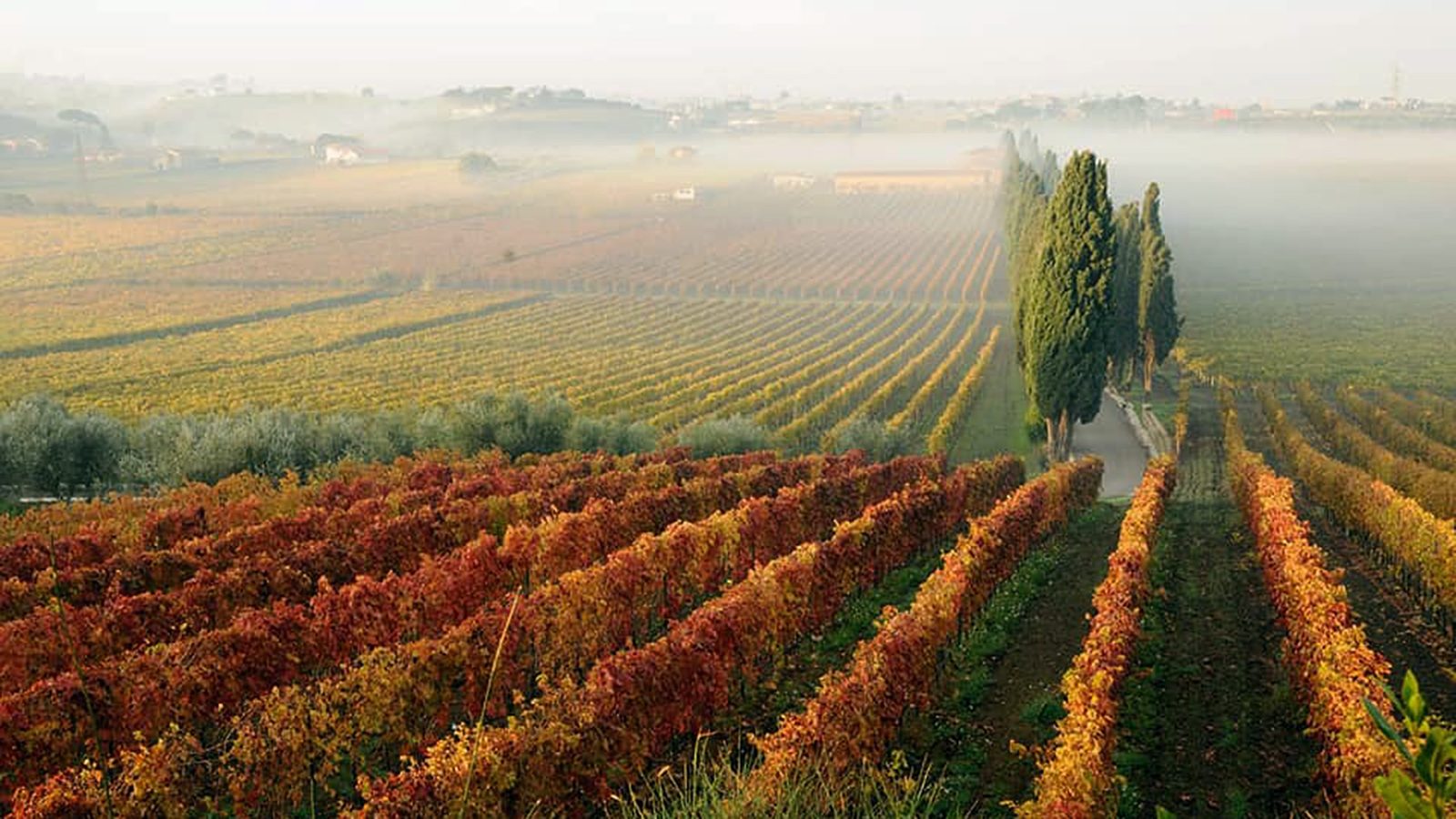
Frascati is a dry white wine produced in the volcanic hills southeast of Rome, made from a blend of indigenous Italian grapes. The wine has been produced in this region for over two thousand years, and its crisp, mineral character reflects the unique terroir of the Castelli Romani.
Quick answer
Frascati is a dry white wine made primarily from Malvasia Bianca di Candia and Trebbiano grapes, with smaller proportions of Malvasia del Lazio and Greco. The blend produces a light-bodied, straw-colored wine with citrus and mineral notes, typically ranging from 11 to 12.5% alcohol by volume. The volcanic soil of the region imparts a distinctive mineral quality that distinguishes Frascati from other Italian whites.
The volcanic tufa soil beneath Frascati's vineyards creates wines that taste unmistakably of their place. The porous rock drains quickly after rain, stresses the vines just enough to concentrate flavor, and leaves a flinty trace in the finished wine that locals call the taste of Rome itself. What type of wine is Frascati begins with the blend. Malvasia Bianca di Candia forms the majority, bringing floral aromatics and body. Trebbiano adds structure and acidity. The regulations permit up to 15% of other local white varieties, and many producers include Malvasia del Lazio for its almond notes or Greco for tension and length. The result is a wine built for the table rather than the cellar, best consumed within two years of harvest when its orchard fruit and herbal freshness are at their peak. The designation Frascati Superiore requires riper grapes from specific vineyard zones at higher elevation, resulting in wines with greater concentration and a minimum alcohol level of 11.5%. These bottlings show more weight and can develop honey and hazelnut notes with a year or two of age, though they retain the bright acidity that defines the Frascati style. Frascati Cannellino, a sweeter variant made from late-harvest grapes, represents less than 2% of production but demonstrates the versatility of the region's fruit. Understanding Frascati wine means recognizing its role in Roman dining culture. The wine was engineered over centuries to cut through olive oil, match the salinity of cured pork, and survive the journey from hillside cantina to city tavern without refrigeration. Its moderate alcohol and clean finish made it the default choice for lunch and dinner alike, a function it still serves in trattorias throughout Lazio. The wine is rarely exported in large volumes, which means tasting it in Frascati itself offers access to small-production bottlings that never leave the region.
“The volcanic tufa soil beneath Frascati's vineyards creates wines that taste unmistakably of their place.”
Frascati is a white wine from the Lazio region of Italy, renowned for its crisp, dry, and mineral-forward profile. It is traditionally crafted as a blend centered on Malvasia and Trebbiano grape varieties.
The primary grape in Frascati is Malvasia, specifically Malvasia Bianca di Candia and Malvasia del Lazio, which contribute aromatic qualities to the blend.
Trebbiano Toscano is frequently blended with Malvasia to provide acidity and structure, ensuring the wine maintains its characteristic freshness.
The vines are grown in the volcanic soils of the Alban Hills, which impart a distinct mineral quality to the finished wine.
Frascati holds both DOC and DOCG status, the latter specifically for Frascati Superiore, ensuring adherence to strict production standards.
The wine is typically produced to be dry, featuring notes of citrus, green apple, and white flowers, making it a versatile food partner.
Winemaking in the region surrounding Frascati dates back to ancient Roman times, utilizing the unique microclimate of the Lazio hills.
Roman poets celebrated the wines of the Alban Hills long before the medieval town of Frascati took shape. Pliny the Elder documented vineyards near Tusculum in the first century AD, praising the white wines produced on volcanic slopes. When Tusculum was razed in 1191, survivors migrated downhill and founded Frascati, carrying viticulture traditions with them. By the Renaissance, papal families—the Aldobrandini, Borghese, and Colonna—built summer villas across the hillsides and expanded wine estates to supply Rome's taverns. What type of wine is Frascati became a question answered by the crisp, dry whites shipped in casks to the capital, where they earned the nickname "vino dei Castelli." The phylloxera epidemic of the 1870s devastated European vineyards, yet Frascati's growers replanted with grafted Malvasia Bianca di Candia and Trebbiano vines, preserving the wine's character. In 1966, Frascati earned DOC status, formalizing production zones and grape blends. The appellation was elevated to DOCG—Denominazione di Origine Controllata e Garantita—in 2011, recognizing the Superiore designation for wines meeting stricter aging and quality standards. This legal framework cemented Frascati wine as a protected regional product, distinct from generic Lazio whites. Today, visitors walking through Frascati's centro storico pass stone cellars still used by family wineries, some occupying Renaissance-era basements. The volcanic tufo rock that stored wine at stable temperatures for centuries remains visible in cantina walls. Villa Aldobrandini's terraced vineyards, though privately owned, frame the town's southern skyline, a living remnant of the aristocratic estates that shaped Frascati's viticultural identity. The question of what type of wine is Frascati is answered not only in tasting rooms but in the landscape itself—the slopes, the tufo, and the vines rooted in two millennia of continuous production.
Pliny the Elder documents white wine production in the Alban Hills near ancient Tusculum.
Destruction of Tusculum prompts survivors to establish Frascati and replant vineyards on lower slopes.
Papal families construct summer villas and expand wine estates, supplying Rome with Castelli whites.
Phylloxera epidemic devastates vineyards; growers replant with grafted Malvasia and Trebbiano rootstock.
Frascati receives DOC designation, formalizing production zones and permitted grape varieties.
Frascati Superiore elevated to DOCG status, Italy's highest quality classification for wine.
The period from late spring to early autumn offers the most favorable conditions for exploring Frascati vineyards, with harvest season peaking in September. These months provide the ideal climate for outdoor tastings and vineyard tours while ensuring optimal access to local producers.
Mild with temperatures 15°C–22°C
Vines begin growth and the landscape is lush. Ideal for walking tours and comfortable outdoor wine tasting.
Warm with temperatures 25°C–30°C
Vineyards are active, though afternoon heat requires planning. Early day visits are recommended to avoid peak temperatures.
Pleasant with temperatures 20°C–26°C
This is the most active time for winemaking. Visitors can observe the grape harvest and pressings in local cellars.
Cool with temperatures 15°C–20°C
The landscape turns golden after the harvest. The weather is stable and conducive to exploring the town's historical wineries.
Verdict: The best time to visit is during the harvest in September or the mild days of May, ideally arriving within the best arrival window of 09:00–18:00 to maximize winery access.
The town of Frascati is accessible to visitors daily. Local wineries generally align their operations with the broader visitor hours provided below.
Visiting the town of Frascati requires no admission fee. Costs only apply if you choose to book private winery tours or tastings.
Verdict: The town itself is free to enter, while individual winery tour prices depend on the specific program selected.
Frascati is located in the Metropolitan City of Rome, Lazio, Italy. The most efficient way to reach the town from central Rome is by regional train.
Regional train from Roma Termini station to Frascati station
A1 motorway towards Napoli, exit at Monte Porzio Catone
Direct transfer from Rome city center
To enjoy the local atmosphere and access wineries, plan your arrival between 09:00–18:00. The town of Frascati has an entrance fee of 0 EUR.
Everything you need to know about what type of wine is frascati
When asking what type of wine is frascati, it is important to know that it is a historic white wine produced in the Lazio region. It is primarily made from Malvasia bianca di Candia and Trebbiano Toscano grapes, offering a crisp and refreshing profile. This golden-hued beverage has been celebrated since Roman times for its versatility and bright acidity. To understand what type of wine is frascati, consider its classification, as it is officially recognized as a white wine. It ranges from dry to sweet styles, though the modern standard focuses on dry, mineral-rich expressions. Learning what type of wine is frascati helps visitors appreciate the unique volcanic soil influence of the Castelli Romani hills. The Frascati Superiore DOCG designation represents the highest quality tier of this local white wine, requiring stricter production standards. These wines often display floral notes and a distinctively savory finish that pairs well with Roman cuisine. If you are researching what type of wine is frascati, planning your trip between 09:00 and 18:00 is recommended to fully experience the local winery atmosphere. This window ensures you have adequate time to explore the cellars and vineyards while the town is most vibrant. The town of Frascati itself has an entrance fee of 0 EUR, meaning there is no cost to enter and explore the area. You will only need to budget for the specific wine tastings or tours you choose to book through our site. Yes, many wineries in the area are welcoming to families, though it is best to check individual tour descriptions for specific age policies. Since children cannot consume alcohol, focusing on the historical architecture and vineyard walks is a great way to include them in the experience. A common mistake is failing to book wine tours in advance, which can limit your access to smaller, family-run estates. We recommend planning your visits early to ensure availability and to make the most of your time in this historic winemaking destination.
Frascati Wine Tasting
Read more Tickets & toursFrascati Half Day Wine Tour
Read more Tickets & toursFrascati Food and Wine Tour
Read more GuideWhat Does Frascati Wine Taste Like
Read more GuideWhat to Expect on a Wine Tour
Read more Tickets & toursFrascati Wine Tour from Rome
Read more Tickets & toursWine Tasting and Pasta Making
Read more Tickets & toursFrascati Winery Tours
Read more